Zero tolerance becomes India’s terror policy
India’s new normal: A firm stand of zero tolerance for terror
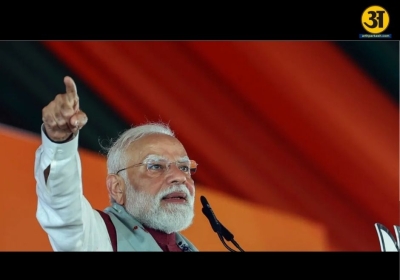
Prime Minister Narendra Modi has sent a strong message to the world – India will no longer tolerate terrorism in any form. Through Operation Sindoor, launched on May 7, 2025, the country showed it is ready to respond swiftly and decisively to any attack. This operation was India’s bold answer to the brutal terrorist attack in Pahalgam on April 22, 2025, which killed 26 people, including tourists and a Nepali citizen.
The attack, which targeted women and families, was described by PM Modi as a personal tragedy. He named the operation “Sindoor” to symbolise the wiping away of the vermilion of India’s daughters and sisters. The choice of name was a direct warning to those who dare target Indian citizens.
A tech-driven military response
Operation Sindoor was a masterclass in modern warfare. The Army, Air Force and Navy worked in perfect coordination, using advanced Indian-made weapons like the BrahMos missile, Akash air defence system and D-4 anti-drone systems. In just 25 minutes, 24 precision strikes destroyed nine key terrorist targets in Pakistan and Pakistan-occupied Kashmir. These included major terror camps in Bahawalpur and Muridke – which PM Modi called “universities of terror.”
The operation also eliminated more than 100 dangerous terrorists, some responsible for past attacks like the Pulwama bombing and the IC-814 hijacking. It wasn’t just about bombs and missiles – India also used space, cyber and electronic warfare to ensure total success.
The Indian Air Force bypassed Pakistan’s Chinese-supplied defence systems and struck deep into enemy territory. Satellite images later showed extensive damage to air bases in Rahim Yar Khan, Rafiqui, Murid, Sukkur, Chunian, Pasrur and Sialkot. India’s air defences also intercepted multiple drone and missile attacks from Pakistan.
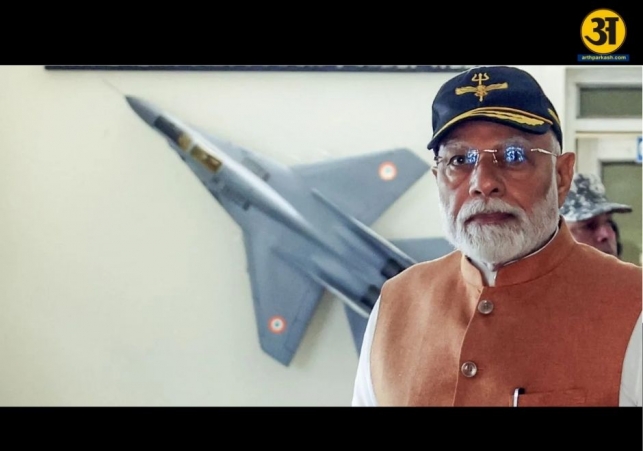
When Pakistan claimed it had destroyed Indian jets and missile systems, PM Modi visited the Adampur Air Base with an intact MiG-29 and S-400 in the background – a live rebuttal to enemy propaganda.
A shift in India’s security policy
In his May 12 speech, PM Modi declared that “terror and talks can’t go together” and “terror and trade can’t go together.” He said Operation Sindoor is now India’s new normal – a doctrine built on three principles: zero tolerance for terrorism, no talks under nuclear threat, and no difference between terrorists and the states that support them.
The operation is not over; it is “on hold,” depending on Pakistan’s behaviour. If another attack occurs, Modi promised a strong response on India’s terms.
This approach has earned India global attention. Defence attachés from 70 countries were briefed on the operation’s details, except China. The message was clear – India is self-reliant, confident and ready to act alone if needed.
The operation also revealed Pakistan’s deep involvement in terrorism, including military officers attending terrorists’ funerals. India’s strikes on both terror camps and military sites sent a warning – the State will be held responsible for aiding terrorism.
Modi’s leadership and national unity
From naming the operation to leading multiple security meetings, PM Modi’s role was hands-on. His visit to Adampur Air Base boosted troop morale, as did his speeches linking India’s modern weapons to historic symbols like Maharana Pratap’s horse Chetak.
Even opposition leaders, including Congress MP Shashi Tharoor, praised the operation’s execution. Across the country, people expressed pride – some parents even named their newborn daughters “Sindoor” in tribute. The BJP held Tiranga Yatra processions to honour the armed forces, and defence stocks rose sharply after the strikes.
During the operation, India also faced cyberattacks from Pakistan and China. Strong cybersecurity measures prevented any damage. The government also blocked Turkish broadcaster TRT World in India for spreading anti-India narratives.
ALSO READ: World Organ Donation Day 2025: History, significance, and how you can become a donor
ALSO READ: Significance of IAF downing an ELINT, AEW&C aircraft in Operation Sindoor
Building a self-reliant defence
Operation Sindoor was possible because of years of military modernisation under Modi’s leadership. India has shifted to a “non-contact war model,” using drones, missiles and cyber tools to hit deep into enemy land without large troop movements.
Projects like the BrahMos Integration and Testing Facility in Lucknow show how India is boosting defence manufacturing. This Rs 300 crore facility will not only produce world-class missiles but also create jobs, develop local industries and train skilled workers.
Compared to earlier operations – the 2016 Uri surgical strikes and the 2019 Balakot airstrikes – Operation Sindoor was far bigger in scale and sophistication. It struck multiple high-value targets deep inside Pakistan, proving India’s leap in military capability.
A message to the world
Operation Sindoor has changed the rules of the game. It has shown that India will not wait for talks or international mediation when its citizens are attacked. The Modi doctrine is clear – put the nation first, be ready for combat, use advanced technology, and never compromise with terror.
As the operation remains on hold, the world is watching Pakistan’s next move. But one thing is certain – India’s new normal is here to stay. Under Modi’s leadership, the country has drawn a firm red line, backed by strength, unity and the will to act.
Related News